


What is Ogalite?
A thorough explanation of its features and benefits.
What is Ogalite?
A thorough explanation of its features and benefits.
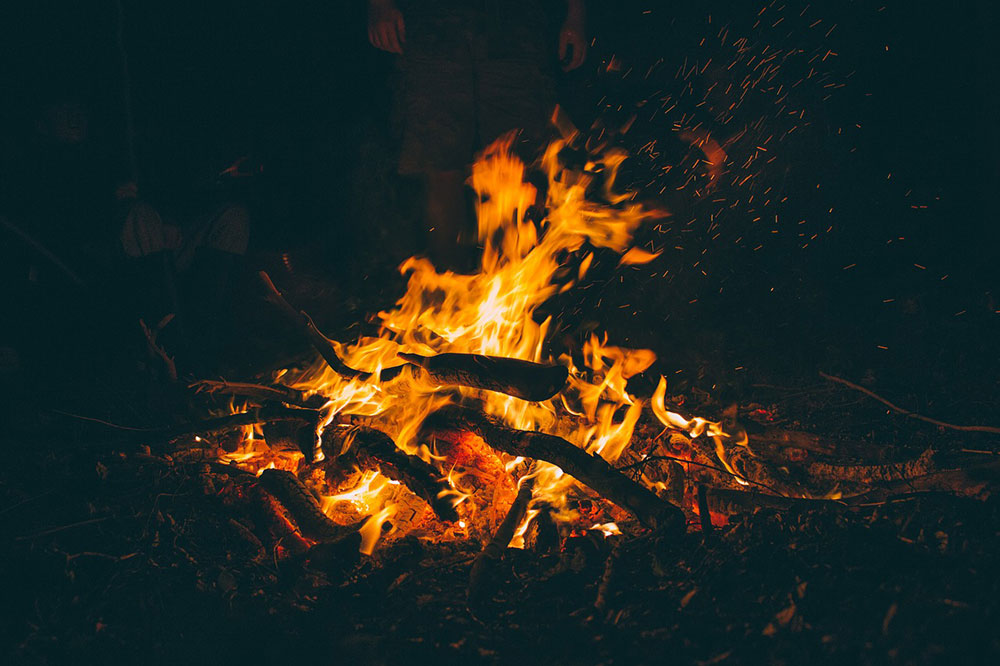
Ogalite is a fuel often used as a substitute for firewood or for barbecues.
Because ogalite is easy to handle, it's a perfect fuel for camping beginners. This article explains the basics and characteristics of ogalite. We also explain ogalite charcoal, which is made from ogalite, so please refer to it.
What is Ogalite?
This section explains the definition of ogalite and the differences between ogalite and ogalite charcoal.
Definition of Ogalite
According to the "Standards for Fuel Charcoal" established by the Japan Fuel Association, the definition of ogalite is
"A product made by heating and pressurizing powdered wood material (sawdust) and then shaping it."
It is said to be an artificial fuel made by compressing sawdust and wood chips that are produced when processing timber.
It is rod-shaped, 30-50 cm long. It is commonly circular or hexagonal, and has holes like a chikuwa (fish cake). Ogalite was developed at the end of the Taisho era. It became popular from the post-war period to around 1975, and at that time mainly supported people's lives as fuel for heating bathwater. Currently, it is often used for bonfires and barbecues at campsites.
Ogalite is also contributing to the environment.
Ogalite is also an environmentally friendly fuel. It is made using biomass resources, specifically sawdust generated during the processing of coniferous trees such as cedar, cypress, and pine. The necessary parts are cut, and the leftover scraps that would otherwise be discarded are put to good use.
What is the difference between Ogalite and Oga charcoal?
You can buy charcoal briquettes at home improvement stores, camping supply stores, and online. While charcoal briquettes and charcoal briquettes may seem similar, they are completely different products.
Ogalite refers to solid fuel made from sawdust. Oga charcoal, on the other hand, is charcoal made by carbonizing ogalite (*1). Like ogalite, ogga charcoal is also valued as an eco-friendly fuel in restaurants and barbecue areas.
*1 Carbonization is the process of removing water and excess components from wood.
What are the characteristics of Ogalite?
This section explains the characteristics and uses of ogalite (a type of briquette), as well as its advantages compared to charcoal.
It ignites quickly and has excellent heat output.
Ogalite is characterized by its easy ignition and strong heat output. The raw material for Ogalite is coniferous trees such as cedar, cypress, and pine. The inside of the wood has pores that allow nutrients and moisture to pass through. Coniferous trees, which are the raw material for Ogalite, have a particularly large number of pores compared to other types of wood.
The more pores a material has, the better it can retain oxygen inside. Naturally, the more oxygen a material contains—the more oxygen needed to start a fire—the easier it is to burn. Ogalite is a fuel made from such coniferous trees.
Easier to handle than firewood
When making a campfire while camping, firewood is commonly used. However, starting a fire with firewood and keeping it burning requires considerable experience. Furthermore, there's the hassle of gathering the firewood and cutting it to size using a hatchet.
On the other hand, Ogalite can be purchased at home improvement stores or online in the amount needed. Because the material is soft, it can be easily broken by hand. Furthermore, it burns for about an hour, making it easier to handle than using firewood.
Unless you want to enjoy camping that's as close to nature as possible, if you're a beginner at starting fires or want to avoid the hassle, I recommend using compressed sawdust briquettes instead of firewood.
Ogalite is safer than charcoal because it doesn't explode.
Explosion is a property of charcoal. It occurs when gases and water vapor inside the charcoal are rapidly heated, expand, and then explode when they have nowhere to escape. Explosion is more likely to occur if charcoal is stored improperly and becomes damp.
The charcoal fragments from a popping explosion are sharp and extremely dangerous if they get into your eyes. There's also a risk of burns to your skin or scorched clothes when barbecuing. Once a popping explosion occurs, it continues until the charcoal is completely shattered, so caution is necessary.
In that respect, since Ogalite is not charcoal, it does not explode. Therefore, it is safer to start a fire with it than with charcoal, even in campgrounds where there are children nearby.
Which restaurants frequently use ogalite (a type of briquette)?
Ogalite is commonly used at campsites and barbecue areas. It's widely used because it ignites easily and is a safe fuel to handle. Even in restaurants, pizza places, for example, use ogalite instead of firewood.
Furthermore, "Oga charcoal," which is made by carbonizing sawdust briquettes, is widely used in restaurants because it burns for a long time and is inexpensive. Let's take a closer look at "Oga charcoal," which is made by carbonizing sawdust briquettes.
What is sawdust charcoal?
Oga charcoal is made by carbonizing sawdust, which is a by-product of wood processing. In other words, oga charcoal is made from compressed sawdust. While Binchotan charcoal is well-known, oga charcoal has comparable performance in terms of heat output and burning time.
Benefits of charcoal
environmentally friendly
Because it is made from compressed sawdust that would otherwise be discarded, it is environmentally friendly.
It ignites quickly
Because it ignites more easily than firewood or binchotan charcoal, it can shorten preparation time.
Excellent cost performance
It uses biomass resources and is more cost-effective than binchotan charcoal. It is popular in izakayas (Japanese pubs) with lower prices per unit and in all-you-can-eat yakiniku (Japanese barbecue) restaurants that use shichirin (small charcoal grills).
The uniform shape makes it easy for beginners to handle.
Because it is made by carbonizing artificially shaped sawdust briquettes, the size and shape are uniform. It can be easily broken by hand, making it easy for beginners to handle.
Disadvantages of charcoal
It burns for a shorter time compared to Binchotan charcoal.
The advantage of charcoal made from compressed sawdust is that it ignites easily, but this also means it burns for a shorter time. Therefore, in places like campsites and restaurants where you need to maintain a fire for extended periods, you'll need to add more charcoal.
Inferior in appearance
Because it is made from molded sawdust briquettes, all of them have the same shape, making them less aesthetically pleasing. Therefore, it is unsuitable for high-end restaurants and similar establishments where visual appeal is a key element of the dining experience.
For all your charcoal needs, visit Nakasho Shoten
This time, we introduced the basics and characteristics of ogalite, as well as ogalite charcoal, which is made from ogalite. Ogalite and ogalite charcoal are easy to handle and are suitable fuels for beginners.
Furthermore, because it is made from biomass resources, it can be considered an environmentally friendly fuel. If you are a restaurant owner looking for an alternative to firewood, or if you want to easily start a fire for camping or barbecues, please try using Ogalite.
Nakasho Shoten sells a wide range of high-quality fuels, from Binchotan charcoal and Oga charcoal to Oga briquettes. Nakasho Shoten's charcoal is ideal because it burns for a long time, is price-effective, and has a stable supply. Please try the charcoal and fuels handled by this eel wholesaler with a history of over 90 years.