


What is the best charcoal for a yakiniku restaurant?
What is the recommended "sawdust charcoal"?
What is the best charcoal for a yakiniku restaurant?
What is the recommended "sawdust charcoal"?
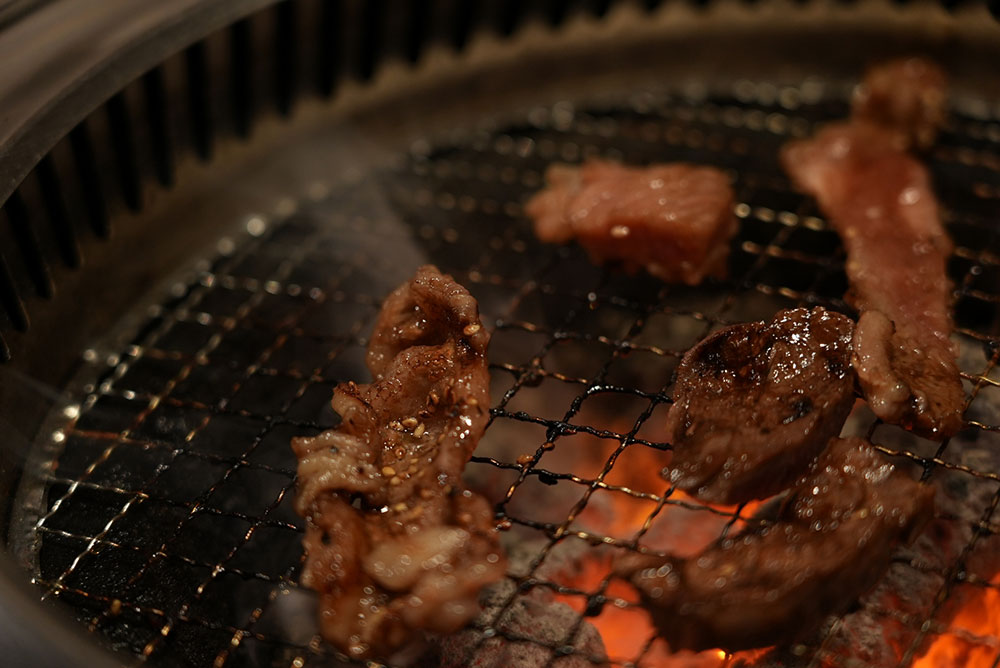
There are many restaurants that use charcoal, but there are not many that actually have customers use the charcoal directly.
Yakiniku restaurants are one of the few restaurants where customers directly use charcoal.
Since the charcoal will be placed in a charcoal grill or similar and placed in front of the customers, special attention must be paid to safety.
In addition, the quality of the ingredients as well as the type of charcoal used will affect the finished product, so the choice of charcoal is a factor that can affect sales.
So, this time we will explain in detail the charcoal commonly used in yakiniku restaurants, the important points to consider when choosing charcoal, and recommended charcoal.
Charcoal often used in yakiniku restaurants
There are many types of charcoal, but most yakiniku restaurants use sawdust charcoal.
What kind of charcoal is sawdust charcoal? We will give you a simple explanation!
What is sawdust charcoal?
Sawdust charcoal is a type of charcoal made from recycled sawdust produced during wood processing. Sawdust is recycled as a raw material and then carbonized to become sawdust charcoal.
Binchotan and sawdust charcoal are manufactured using the same method, so they have very similar properties.
There is an image that "charcoal = binchotan is good!", but sawdust charcoal has characteristics that only sawdust charcoal has, and depending on the use and situation, sawdust charcoal may have greater advantages.
Characteristics of charcoal used in yakiniku restaurants
What kind of characteristics does a yakiniku restaurant need for charcoal? We will explain in detail.
Safe and no explosions
At yakiniku restaurants, charcoal is placed on the customer's table.
Therefore, charcoal that explodes, such as Binchotan, can cause injuries and other problems. Explosion occurs when charcoal is heated suddenly, making a loud popping noise and causing the charcoal to crack or pop.
When charcoal explodes, pieces of charcoal fly everywhere, often wasting food, so charcoal that explodes is not suitable for yakiniku restaurants, where people who are not used to handling charcoal will be handling charcoal.
Not only customers but also employees often carry charcoal around the store, so the most important point is to use charcoal that is safe to use and does not explode.
Easily adjustable size
At yakiniku restaurants, charcoal is placed on a smaller grill such as a hibachi grill, so charcoal that is too large or difficult to resize is not suitable.
The hardness of charcoal varies depending on the type. By using softer types, anyone can easily break them, and softer charcoal is often used so that you don't have to worry about it not fitting into the grill.
Moderate burn time
Let's look at the burn times of typical charcoal.
・Binchotan charcoal: about 8 hours
・Sawdust charcoal: 3 to 5 hours
・Charcoal: 1 to 2 hours
・Ogalight: About 1 hour
The burn time varies greatly depending on the type, ranging from 1 to 8 hours, but yakiniku restaurants often use charcoal with a burn time of around 3 hours.
The reason is simple: customers usually stay for around 2-3 hours.
If the burn time is too short, you will have to change the charcoal midway, which is not only time-consuming but also dangerous. On the other hand, there is no need to maintain the fire for 8 hours, so using binchotan charcoal would be a waste of money.
Of the above, sawdust charcoal and black charcoal fit the bill in terms of burning time, but black charcoal is not often used because it generates too much heat (it tends to catch fire).
Less ash, easy to clean up
The amount of ash produced after burning varies depending on the type of charcoal.
Since the charcoal grill needs to be cleaned after each customer rotation, those that produce less ash are preferred.
This is one of the important points to keep in mind so that you don't end up missing out on an opportunity because you didn't have time to clean up afterward.
We recommend "Oga charcoal" for yakiniku restaurants!
Sawdust charcoal is the most commonly used type in yakiniku restaurants, and it is also the type we would most recommend.
The reason is simple: it has all the characteristics necessary for charcoal used in yakiniku restaurants, as I explained earlier.
・Safe and no explosions
-Easily adjustable size
- Moderate (2-3 hours) burn time
- Less ash, easy to clean up
Especially at yakiniku restaurants, the fact that it is safe and there are no explosions is a major advantage that cannot be ignored.
In addition to these characteristics, sawdust charcoal also has other benefits such as being easy to light and being inexpensive. Because it uses a large amount of charcoal, it is a great value in terms of cost.
Of course, Oga charcoal is also excellent in terms of heat output. The far infrared rays lock in the flavor while cooking the food tenderly, and the fragrant aroma of the charcoal is sure to increase customer satisfaction.
Using high-quality sawdust charcoal is a factor that directly affects sales.
For all your charcoal needs, visit Nakasho Shoten
We introduced "Oga charcoal," a type of charcoal often used in yakiniku restaurants, and explained the important points to consider when choosing charcoal.
Oga charcoal has all the characteristics necessary for charcoal in a yakiniku restaurant.
You can grill meat using any type of charcoal, but there are cases where problems such as explosions can occur, so we strongly recommend using high-quality sawdust charcoal.
If you haven't used sawdust charcoal yet, why not take this opportunity to consider it?
Nakasho Shoten sells a wide range of high-quality charcoal, from binchotan to sawdust. Nakasho Shoten's charcoal is ideal for long-lasting flames, offers competitive pricing, and a stable supply. Please try out the charcoal produced by an eel wholesaler with over 90 years of history.