


What are Binchotan, Oga charcoal, Kuro charcoal, and Oga briquettes?
A thorough comparison of charcoal!
What are Binchotan, Oga charcoal, Kuro charcoal, and Oga briquettes?
A thorough comparison of charcoal!
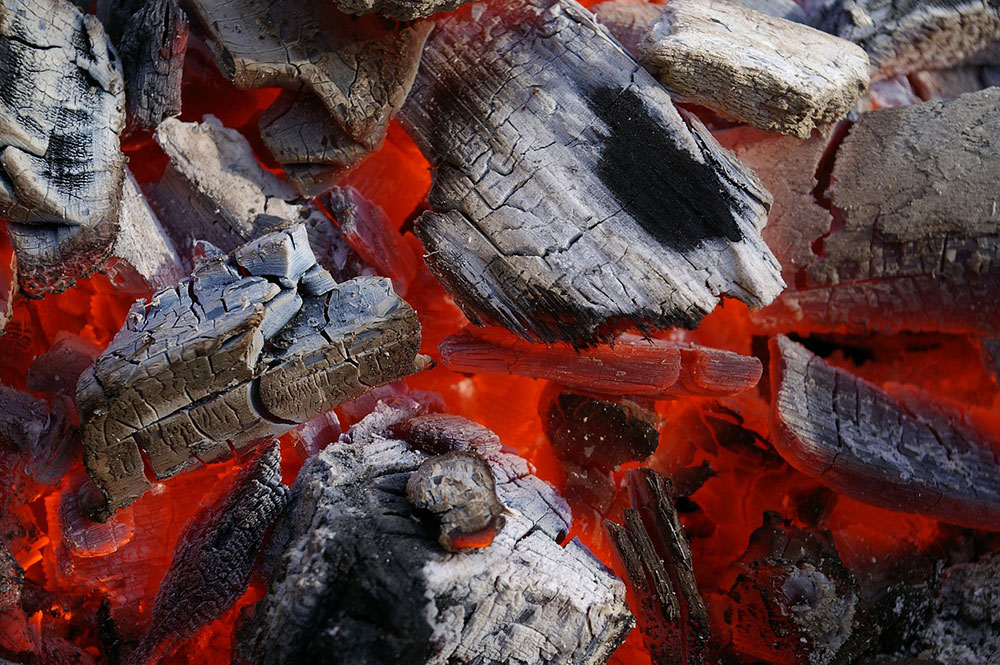
Do you know the differences between Binchotan, Oga charcoal, Kurozumi, and Oga briquettes? And are you using each type appropriately?
This article explains each type of charcoal—binchotan, kurozumi, oga charcoal, and oga briquettes—and also provides guidance on how to choose the right one for different situations.
Types of charcoal
This section explains the basics and characteristics of binchotan charcoal, black charcoal, sawdust charcoal, and sawdust briquettes.
What is Binchotan charcoal?
There are two main types of charcoal: black charcoal and white charcoal. Binchotan charcoal is a high-end brand of white charcoal, considered to be of the best quality. It has a higher density than other types of charcoal, and once lit, it can burn for several hours. It also emits an overwhelming amount of infrared radiation, which coats the surface of meat and fish, locking in the flavor. Because it enhances the taste of the ingredients, it is a type of charcoal that is often used in Japanese restaurants, eel restaurants, and yakitori restaurants.
What is black charcoal?
Black charcoal is a type of charcoal that differs from white charcoal in its extinguishing method. To extinguish black charcoal, the firebox and smoke outlet are sealed with clay or stones to gradually remove oxygen, allowing the fire to naturally die out. It is softer and more easily crumbled than white charcoal. Although its burning time is relatively short, it is characterized by its quick ignition speed. Generally, woods such as sawtooth oak and Japanese oak are used to make black charcoal.
What is sawdust charcoal?
Oga charcoal is made by carbonizing a solid fuel called ogalite. Both white and black varieties exist, and they are used differently depending on the application. Oga charcoal is characterized by its ease of use, even for beginners. In addition, it ignites more easily than white charcoal or binchotan charcoal, and its excellent cost performance is a major advantage.
What is Ogalite?
Ogalite is a solid fuel made by heating and compressing sawdust, a by-product of processing cedar, cypress, pine, and other woods. Because it uses biomass resources that would otherwise be discarded, it is considered an environmentally friendly fuel. It can be easily broken by hand without the need for tools, so it is often used as a substitute for firewood at campsites.
How to choose the right charcoal
The key to choosing the right charcoal is to consider its characteristics and ease of use, and select it according to your intended purpose. Here, we will explain how to choose charcoal by type and situation.
For restaurants that prioritize quality, "Binchotan charcoal" is the answer.
Among white charcoals, Binchotan is the highest-grade brand. Although it takes a while to ignite, it has the longest burning time of all charcoals and offers exceptional heat stability. In addition, Binchotan emits a large amount of two types of infrared rays, which can bring out the full potential of the ingredients.
First, near-infrared rays brown the surface of the food, coating it to prevent the flavor from escaping. Next, far-infrared rays heat the food evenly, breaking down proteins into glutamic acid. Glutamic acid is a type of amino acid also known as the "umami component."
Because it produces a crispy exterior and a fluffy interior, this charcoal is highly valued by chefs seeking the ultimate taste, such as those working in high-end restaurants and eel shops. However, while its high quality is undeniable, the corresponding cost is a drawback of Binchotan charcoal.
For beginners barbecuing, "black charcoal" is easy to light.
If this is your first time barbecuing or you're not used to handling charcoal, we recommend black charcoal, which is easy for beginners to use. Black charcoal has the characteristic of igniting relatively quickly. Also, it is less likely to go out before the flame fully develops, making it one of the easiest types of charcoal to use.
When you've booked a barbecue site and want to cook all your food within a limited time, maintaining a stable heat is essential. In such situations, having charcoal that can be quickly lit and replenished, and is easy to handle, will be extremely useful.
However, while black charcoal ignites quickly, its short burning time is a drawback. Since you need to continuously replenish the charcoal, it may not be suitable for those who want to relax and enjoy nature.
If you prioritize cost-effectiveness, choose "Oga charcoal".
If you want high performance at a reasonable price, oga charcoal is perfect. Because it burns longer than regular charcoal, it's also recommended for those who find it troublesome to add charcoal midway through. It's ideal for intermediate users who are a little more familiar with handling charcoal.
Furthermore, charcoal made from compressed sawdust has the advantage of producing less smoke. For example, when having a barbecue in your backyard or on your terrace, thick smoke can be a nuisance to your neighbors. Because charcoal made from compressed sawdust produces less smoke, it can be used safely for barbecues at home.
It's also convenient for use in yakiniku restaurants, where it's placed inside a charcoal grill. It burns at a high temperature for 3-4 hours, making it cost-effective and reducing the hassle of frequent charcoal replacement. However, if you need to extinguish it quickly, you must properly extinguish the flame. Depending on how you use it, its long burning time can also be a disadvantage.
If you're using it as a substitute for firewood or wood for campfires, then use Ogalite.
Ogalite is an artificial fuel made by compressing sawdust and wood chips, which are by-products of timber processing. Therefore, its strengths lie in its ease of ignition and strong heat output. Compared to white charcoal and binchotan charcoal, it's easy for even beginners to start a fire with.
For those unfamiliar with handling firewood when making a campfire at a campsite, ogalite (briquettes) are a convenient option. Unlike firewood, they don't need to be collected from the mountains, and they can be easily split and reshaped by hand without the need for tools. Furthermore, they don't produce the "popping" that charcoal does, making them safe even in areas with children.
Furthermore, it is also suitable as an alternative fuel to firewood in restaurants such as pizza shops that use firewood. It is easier to handle than firewood, ignites easily, and produces a strong flame, making it a very convenient fuel.
One disadvantage is its shorter burning time compared to charcoal. While charcoal maintains a high temperature for 3-4 hours, oga-light burns for only about 1 hour. Another drawback is that you won't get the smoky, smoky flavor that comes from grilling with charcoal.
How much charcoal is needed?
The general guideline for charcoal is 1 kg per adult. It's also said to be 1 kg per barbecue grill. However, this is just a guideline. The amount of charcoal needed will vary depending on the type of charcoal chosen and its intended use.
For example, the above does not apply to restaurants where charcoal usage varies greatly depending on the operating status. We recommend preparing extra charcoal in advance so that you don't run out when it matters most.
How can you tell if charcoal is of good quality?
Once you've decided on the intended use and type of charcoal, the next thing to consider is how to identify high-quality charcoal. To get the best possible charcoal, keep the following points in mind when making your selection.
Is it too light?
Good quality charcoal is dense and heavy. Be especially wary of charcoal sold under the name "Binchotan" that is extremely light.
Is there any rustling sound?
Charcoal made from poor-quality raw wood, or charcoal that hasn't been properly roasted during the manufacturing process and retains gas inside, will make a rattling sound when you shake the box. Charcoal with retained gas can cause smoke and popping.
Does the cut surface have a glossy finish?
When choosing inexpensive charcoal, it's okay if the cut edges are a little rough. However, if you're buying high-quality charcoal, choose pieces with a mirror-like finish on the cut edges.
For all your charcoal needs, visit Nakasho Shoten
This time, we introduced the basics and selection of charcoal, including Binchotan, Kurozumi, Oga-charcoal, and Oga-light. The key to choosing charcoal or solid fuel is to select the type that suits the scene and purpose. If you're unsure what kind of charcoal to use at a barbecue or restaurant, please refer to this guide.
Nakasho Shoten sells a wide range of high-quality fuels, from Binchotan charcoal to ogalite. Nakasho Shoten's charcoal is ideal because it burns for a long time, is price-effective, and has a stable supply. Please try the charcoal and fuels produced by this eel wholesaler with a history of over 90 years.