


What is Binchotan charcoal?
This article introduces the basics and characteristics of Binchotan charcoal.
What is Binchotan charcoal?
This article introduces the basics and characteristics of Binchotan charcoal.
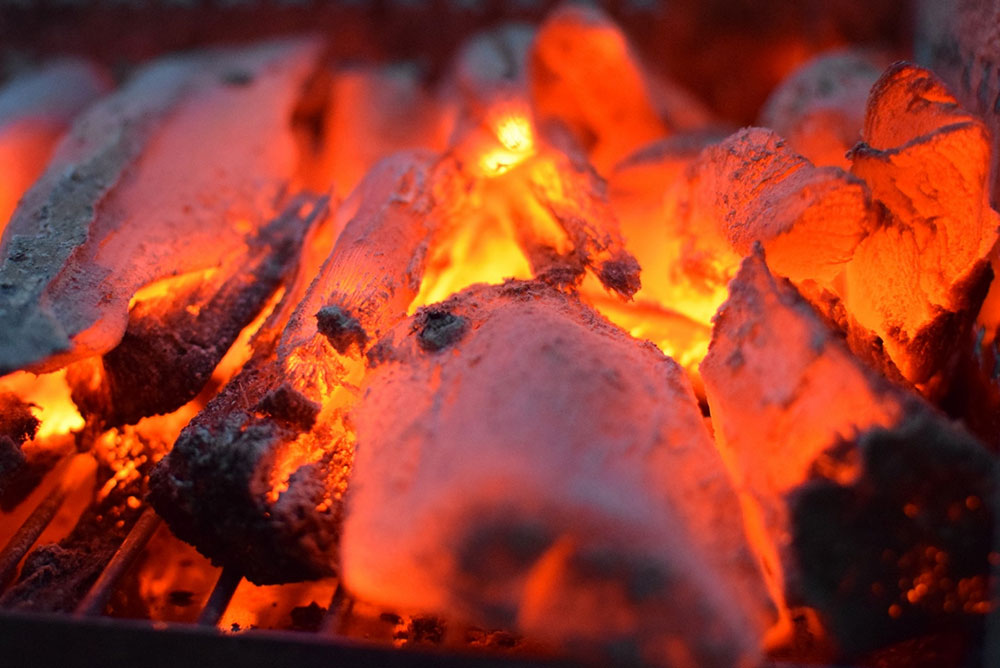
What kind of charcoal is called Binchotan?
While many people may have heard the name "Binchotan," few can probably explain its characteristics and how it differs from other types of charcoal in detail.
There are many types of charcoal, but Binchotan charcoal possesses several outstanding characteristics. This article explains the basics of Binchotan charcoal, its appeal, and its uses.
What kind of charcoal is called Binchotan?
Charcoal generally refers to any material made by carbonizing wood, but it is classified and named differently depending on its properties and materials. Here, we will explain what kind of charcoal is called Binchotan.
Charcoal is divided into black charcoal and white charcoal.
Charcoal can be broadly divided into white charcoal and black charcoal. Simply put, the difference between white charcoal and black charcoal lies in how the fire is extinguished.
Black charcoal is made by blocking the firebox and smoke outlet with clay or stones after firing to eliminate oxygen and waiting for the fire to extinguish naturally. White charcoal, on the other hand, is removed from the kiln immediately after firing. Then, ash mixed with a small amount of water is poured over it to cut off the air supply and extinguish the fire quickly. Thus, the properties of charcoal are determined not only by the firing method but also by how the fire is extinguished.
Binchotan charcoal is a prime example of white charcoal.
Binchotan charcoal is the highest quality and most luxurious type of charcoal. The most famous type of Binchotan charcoal is made from Ubame oak trees grown in Wakayama Prefecture.
Binchotan charcoal, also known as "white charcoal," is made by carbonizing wood in an earthen kiln, rapidly firing it at a high temperature of nearly 1200°C, and then extinguishing the flames quickly with extinguishing powder. This method of charcoal production requires a high level of skill, but the resulting charcoal is extremely hard and has a long burning time.
While Binchotan charcoal ignites less quickly than regular charcoal, it is characterized by its long burning time and strong heat output. Professional chefs value it because it can crisp the surface of food at high temperatures.
The origin of the name Binchotan
There are various theories, but it is said that the name Binchotan originates from the name of a merchant. Bitchuya Chozaemon, a charcoal merchant in Kii Province (present-day Wakayama Prefecture), began making charcoal using Ubame oak as the material. Initially, Bitchuya Chozaemon sold the charcoal he made in his local Kii Province, but later he began shipping it to wholesalers in Edo (present-day Tokyo).
The charcoal that came from Kii Province was of a high quality that was not available in Edo at the time. Potters and eel restaurants were greatly surprised, and it became very popular, especially among charcoal professionals. It is said that Chōzaemon Bitchūya, delighted by the unprecedented boom, named it "Binchō charcoal" after his own shop name.
Characteristics of Binchotan charcoal
Binchotan charcoal is an extremely high-quality type of charcoal. Here, we will explain the characteristics of Binchotan charcoal from the perspectives of heat output, burning time, and ignition.
It has excellent heat stability and a long burn time.
The biggest appeal of Binchotan charcoal is its long burning time. Compared to regular charcoal, it takes less time to ignite, but the heat is more stable. Also, it burns for a long time, so once lit, it can be used for an extended period.
Therefore, in restaurants such as Japanese restaurants and yakitori restaurants, there is the advantage of being able to continue grilling at a consistent heat without having to add charcoal during peak hours when staff are busy cooking and serving customers.
When using Binchotan charcoal, be careful of "explosive popping"!
When working with Binchotan charcoal, one thing to be careful of is popping. Popping refers to the charcoal crackling and popping.
The reason charcoal pops is that gases and water vapor expand and burst when heated. Poor quality charcoal that hasn't been properly carbonized often contains gases and water vapor, which can cause it to pop. Even high-quality domestic binchotan charcoal can pop if it's stored improperly and contains moisture.
While a slight crackling sound is not a problem, hard Binchotan charcoal can explode with a loud "bang!" and charcoal fragments can fly everywhere. The charcoal fragments that shatter and fly off have sharp edges and are extremely dangerous if they get into your eyes.
The key to preventing popping is to avoid rapid heating. Allowing gas and steam to escape slowly will prevent popping. Also, when lighting or adding more fuel, it's best to warm it up by placing it away from the flame first.
Uses of Binchotan charcoal
One of the places where Binchotan charcoal is most widely used is restaurants. It is highly valued in the charcoal areas of Japanese restaurants, eel restaurants, and yakitori restaurants. In addition, because Binchotan charcoal maintains a stable heat for a long time, it is also frequently used for barbecues and camping.
In addition, it has excellent deodorizing and moisture-absorbing properties, and is rich in minerals. For this reason, it is used in a variety of ways, such as placing it in wardrobes and shoe boxes, putting it in rice cookers to cook rice fluffy, and making homemade mineral water.
New uses for Binchotan charcoal recommended by the National Fuel Association
● For cooking rice
● For drinking water
● For bath use
(New uses for charcoal, National Fuel Association)
Why Binchotan charcoal makes food taste better
Binchotan charcoal is used in a variety of restaurants, including Japanese restaurants, eel restaurants, yakitori restaurants, and izakayas (Japanese pubs). Here, we will explain why food cooked over binchotan charcoal tastes so good.
The emitted infrared rays create an exquisite texture.
The reason why eel and yakitori grilled over binchotan charcoal taste so good is due to infrared radiation. The stronger the infrared radiation, the more evenly and quickly the food is cooked, coating its surface. As a result, the juices are concentrated inside the food, creating an exquisite texture that is crispy on the outside and fluffy on the inside.
However, Binchotan charcoal isn't the only thing that emits infrared radiation. Infrared rays are also emitted from fires made with gas and from objects at room temperature. So why does the infrared radiation from Binchotan charcoal enhance the flavor of food?
The mystery lies in the amount and duration of infrared radiation emitted.
In the case of gas, it changes form and disappears quickly after combustion. Gas stoves continue to burn because they are constantly replenishing the gas that has been used up to prevent the flame from going out. Therefore, even when a gas stove is lit, the emission of infrared rays is intermittent.
On the other hand, Binchotan charcoal can withstand temperatures exceeding 1,000°C and continues to burn for a long time. Therefore, it can provide a stable supply of infrared radiation for an extended period. The reason why Binchotan charcoal is considered to be of high quality, with characteristics such as "stable heat output" and "long burning time," is because it emits a large amount of infrared radiation.
The low hydrogen content is also a factor that contributes to its delicious taste.
Gas and firewood contain hydrogen. Therefore, when they burn, water vapor containing carbon dioxide is produced. This water vapor is what causes food to become damp after it has been cooked.
However, charcoal contains very little hydrogen. When heating food, it doesn't produce water vapor, resulting in a crispy surface. The high hydrogen content plays a significant role in creating the crisp texture of charcoal-grilled yakitori and grilled fish.
For all your charcoal needs, visit Nakasho Shoten
This time, we introduced the basics, characteristics, and uses of Binchotan charcoal. Binchotan charcoal has a strong heat output and emits infrared rays steadily, so it can quickly sear and coat food, locking in the flavor. Let's make the most of the advantages of Binchotan charcoal.
Nakasho Shoten sells high-quality charcoal, including Binchotan charcoal. Nakasho Shoten's charcoal is ideal because it burns for a long time, is price-effective, and has a stable supply. Please try the charcoal made by an eel wholesaler with a history of over 90 years.