


What is the difference between Binchotan and Oga charcoal?
Explaining the features and how to use them!
What is the difference between Binchotan and Oga charcoal?
Explaining the features and how to use them!
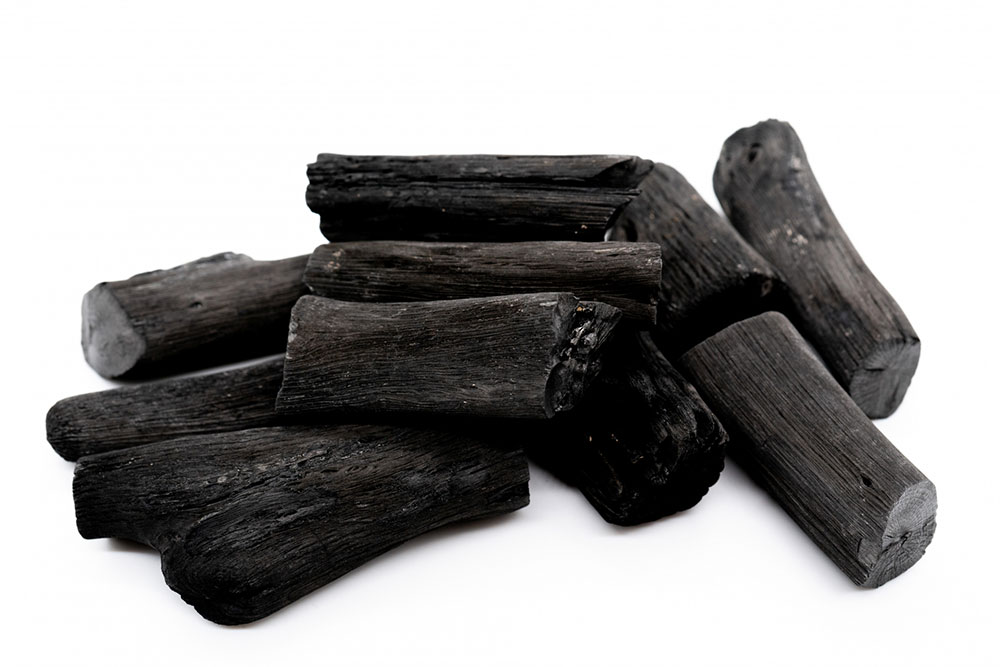
Binchotan and Oga charcoal are often used in restaurants and other establishments, but even if you know the names of both, few people can explain the characteristics and differences between the two.
You may be unsure which charcoal to use because you don't know the characteristics and differences between each, or you may be using charcoal that is not suitable for your purpose without realizing it.
Binchotan charcoal and sawdust charcoal each have their own characteristics, advantages and disadvantages, so by understanding the differences between the two and using them appropriately depending on the situation and purpose, you can gain various benefits such as cost reduction and operational improvement.
This time, we will introduce the characteristics, advantages and disadvantages of Binchotan and Oga charcoal, as well as how to use them.
What is Binchotan charcoal?
First, let me explain what kind of charcoal Binchotan is.
Did you know that Binchotan is also known as "white charcoal"?
Why is it called white charcoal? The name comes from the refining method. Charcoal is carbonized in an earthen kiln, baked at a high temperature of nearly 1200°C, and then extinguished in a single burst with extinguishing powder (soil, ash, and water) to refine it. The ash from the extinguishing powder on the surface of the charcoal looks white, which is why it is called "white charcoal."
Binchotan charcoal refined in this way is extremely hard and has a long burning time. Furthermore, because it requires advanced skills to produce, it is considered a high-quality charcoal.
What are the characteristics of Binchotan charcoal? We will introduce the advantages and disadvantages of using it!
Benefits of using Binchotan charcoal
The benefits of using binchotan charcoal include:
- Long-lasting flame (long burning time)
・Stable strong firepower
・Far infrared effect
- No unpleasant odor when burning
・Low smoke
・Has the feel of natural wood
The biggest advantage is that it can maintain a stable, high heat output, allowing you to "cook food deliciously."
There is almost no flame, and the charcoal itself generates heat and burns, emitting a large amount of far infrared rays.As a result, food grilled over Binchotan charcoal is crispy on the outside and juicy on the inside, allowing you to fully enjoy the flavor.
Disadvantages of using Binchotan charcoal
The disadvantages of using binchotan charcoal include:
・High price
・Difficult to ignite
・Sound and debris from explosions
・Knowledge and experience are required for handling
The thing that concerns me the most is the high cost, right?
For restaurants, charcoal is used every day, so the high price is an issue that people cannot help but worry about.
Also, among those who use Binchotan charcoal on a daily basis, there may be some who have experienced painful burns or other injuries.
It is dangerous to use, so it is best to avoid using it in front of guests. Although it has a high heat output and a long burning time, one of the disadvantages of Binchotan is that it is difficult to handle in a certain place and by certain people.
What is sawdust charcoal?
Next, we will introduce what kind of charcoal sawdust charcoal is.
Sawdust charcoal refers to charcoal made from recycled sawdust produced during wood processing. It is characterized by its appearance with a gaping hole in the middle. We have already introduced the manufacturing method for binchotan charcoal, but sawdust charcoal is also made using the same method and is a fuel with very similar performance. It is not made from natural wood, but is an artificially molded fuel that is more complicated to make than other types of charcoal, but it is loved by many as an eco-friendly fuel.
Some people think that it is an inferior version of Binchotan charcoal because of its low price, but in fact it has many benefits.
Benefits of using sawdust charcoal
The benefits of using sawdust charcoal include:
・Long-lasting flame
-Medium to high heat can be maintained for a long time
・Easy to catch fire
・Far infrared effect
- No unpleasant odor when burning
・Low smoke
- Less ash, easy to clean up
・Low price
No explosions
Easy to use even without knowledge or experience
The biggest advantage of using sawdust charcoal is its cost-effectiveness, as it has similar performance to binchotan charcoal but is cheaper.
Another advantage is that it is easy to handle and does not explode, making it safe for anyone to use.
Disadvantages of using sawdust charcoal
The disadvantages of using sawdust charcoal include:
・Compared to Binchotan charcoal, the heat output and burning time are inferior
・It lacks charm due to artificial molding
The disadvantage of using sawdust charcoal is that it is inferior to binchotan charcoal in terms of the finished product and flavor. On the other hand, if you don't mind that, then this is the one for you! There are no disadvantages to using sawdust charcoal.
The difference between Binchotan and Oga charcoal
We have introduced the characteristics of two types of charcoal: Binchotan and Oga charcoal. Let's compare the two characteristics in an easy-to-understand table.
Binchotan charcoal
Material: Natural wood
Properties: Hard
Price: High
Burn time: Very long
Heat: sustained high heat
Explosion: Yes
Ignition: difficult to ignite
Sawdust charcoal
Raw materials: recycled sawdust
Properties: Soft (harder types also exist)
Price: Cheap
Burn time: Long
Heat: Medium to strong heat sustained
Explosion: None
Ignition: Easy to ignite
It looks like this.
Both charcoal types will cook your food deliciously, but because Binchotan is so highly functional, it is only suitable for experts and professionals. Binchotan is best suited for those with knowledge and experience!
On the other hand, sawdust charcoal is slightly inferior to binchotan in terms of functionality, but it is easy for anyone to use. It is also inexpensive, making it easy to introduce.
How should I use Binchotan charcoal and sawdust charcoal?
In conclusion, both binchotan and sawdust charcoal have the burning time and heat power to grill food deliciously.
Therefore, which one to use should depend not on what you want to bake or what you want to use it for, but on what you prioritize.
When would you want to use Binchotan charcoal?
You might want to use Binchotan charcoal if you care about how deliciously you can grill your food and the natural feel of wood.
Binchotan charcoal can maintain a strong heat for a long time, and when combined with the large amount of far infrared rays it emits, it is unmatched when it comes to "delicious grilling." In addition, the natural wood appearance gives customers the impression of "authentic."
On the other hand, cases where binchotan charcoal is not suitable include "when there is no one with the knowledge or experience" and "when using it on a charcoal grill, etc." Binchotan charcoal is large, hard, and has characteristics such as strong explosions, making it difficult to fit into a small frame such as a charcoal grill, so it is best to avoid using it in front of customers.
Possible scenarios for use include:
・Eel restaurant
・Yakitori restaurant
・Robatayaki Izakaya
Some examples include:
When would you want to use sawdust charcoal?
To put it bluntly, if you want to reduce costs, you should use sawdust charcoal.
Although its heat output and burning time are inferior to those of binchotan, it still has the ability to cook food deliciously.It is also soft and easy to break, and does not explode, making it suitable for use as charcoal for serving in front of customers on a hibachi grill.
In addition to the situations listed for Binchotan, the following situations can be considered:
・Yakiniku restaurant
・BBQ
·camp
・Lighting the binchotan charcoal
Some examples include:
It is inexpensive and easy to handle, so it can be used in more situations than binchotan charcoal.
For all your charcoal needs, visit Nakasho Shoten
We have introduced the characteristics, advantages and disadvantages of Binchotan and Oga charcoal, as well as how to use them.
Binchotan charcoal = High quality charcoal that cooks ingredients deliciously
Sawdust charcoal = Easy to use and cost-effective
As mentioned at the beginning, by understanding the characteristics of each type of charcoal and using them appropriately, you can gain various benefits such as "cost reduction," "quality improvement," and "operational improvement." It is also a good idea to use both types of charcoal to get the best of both worlds.
Please use this article as a reference to choose the charcoal that best suits your needs!
Nakasho Shoten sells high-quality charcoal, including binchotan and sawdust charcoal. Nakasho Shoten's charcoal is ideal for long-lasting flames, offers competitive pricing, and a stable supply. Please try the charcoal produced by an eel wholesaler with over 90 years of history.