


What kind of charcoal is suitable for an Indian curry restaurant?
Let's cut costs by using "Oga charcoal"!
What kind of charcoal is suitable for an Indian curry restaurant?
Let's cut costs by using "Oga charcoal"!
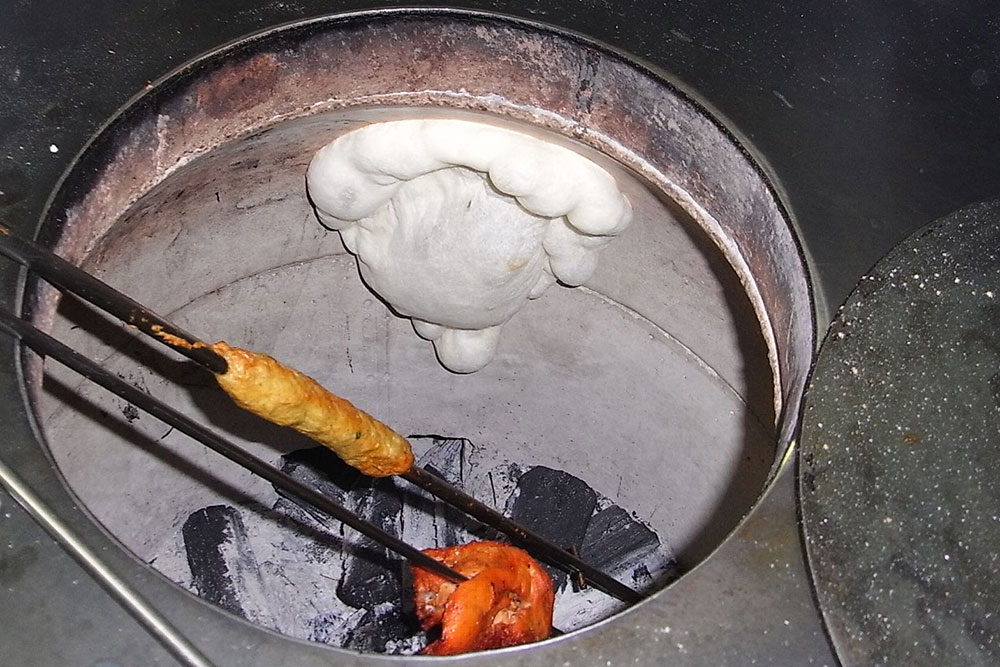
Some people may not have this image in mind, but Indian curry restaurants have tandoors (stone ovens) and use a lot of charcoal.
Naan and tandoori chicken baked in a tandoor oven have the perfect texture—crispy on the outside and fluffy on the inside—and a wonderful aroma!
Charcoal is essential for Indian curry restaurants, but some may be looking for something better than what they are currently using.
What kind of fuel is best suited for an Indian curry restaurant that uses a lot of charcoal? This time, we'll explain in detail the types of charcoal commonly used in Indian curry restaurants, their characteristics, and recommended fuels!
charcoal used in Indian curry restaurants
The most commonly used type of charcoal is "Oga charcoal."
While "Binchotan charcoal" is sometimes used, it is not highly recommended due to its significantly higher cost.
What is sawdust charcoal?
What exactly is the type of charcoal briquette commonly used in Indian curry restaurants?
It is defined as follows:
Oga charcoal (also known as sawdust or oga charcoal) is a type of charcoal made primarily from oga lite (molded firewood), which is produced by compressing and heating sawdust generated during lumber production. (From Wikipedia)
That's a bit of a stiff and difficult-to-understand way of putting it.
Oga charcoal is a type of charcoal made from recycled sawdust produced during wood processing.
The various characteristics of charcoal briquettes make them ideal for Indian curry restaurants, which is why they are used there. But what exactly makes them so suitable?
Let's take a look at the characteristics of the charcoal used in Indian curry restaurants!
Characteristics of charcoal used in Indian curry restaurants
The charcoal used in Indian curry restaurants has the following characteristics:
Long-lasting burn
Since it is necessary to maintain the fire for an extended period, a long burning time is an important factor.
Using products with a longer burning time can also lead to cost reductions.
Easy to maintain a constant temperature
To properly operate a tandoor, it's essential to maintain a consistent temperature.
With natural firewood, burning can be uneven, and you often have to rearrange the wood to maintain the heat, which can be quite troublesome.
Oga charcoal is characterized by its even burning and consistent flame distribution. Its ability to maintain a consistent temperature and the fact that it doesn't require constant attention to heat output are some of the reasons it's so popular.
Because charcoal can be easily broken, it can be used regardless of the size of the tandoor!
No explosive jumps
One reason why oga charcoal is preferred over binchotan charcoal is that "it doesn't pop and is safe to use."
With Binchotan charcoal, which is prone to popping and crackling, there are many cases where the charcoal pops and scatters, causing injuries.
In Indian curry restaurants, where staff sometimes work inside the tandoor oven, using charcoal that doesn't crackle allows anyone to cook safely.
High firepower
The inside of the tandoor needs to be heated to a high temperature of nearly 480°C.
Therefore, if the fuel does not have sufficient heat output, it will be useless, and you will not be able to serve delicious naan or tandoori chicken.
Broadly speaking, the four essential elements for fuel used in Indian curry restaurants are "strong heat output, long burning time, ease of maintaining heat, and safety due to no popping or crackling." For these reasons, charcoal is often used in Indian curry restaurants. The main reason why charcoal is used more often than binchotan charcoal is, of course, cost.
In short, "Oga charcoal," which meets the above four criteria and is a low-cost fuel, is ideal for Indian curry restaurants!
Recommended charcoal for Indian curry restaurants
"Oga charcoal," which is often used in Indian curry restaurants, is recommended for a simple and straightforward reason: it possesses the characteristics I explained earlier: strong heat output, long burning time, ease of maintaining heat, and no popping!
Binchotan charcoal is also excellent charcoal, but it has disadvantages compared to oga charcoal, such as being "expensive, prone to popping, and difficult to light," so it's not really suitable for an Indian curry restaurant.
Oga charcoal is comparable to Binchotan charcoal in terms of heating power and has sufficient performance with a burning time of 3 to 5 hours.
The far infrared rays lock in the flavor while grilling the meat until it is tender, and the fragrant aroma of charcoal is sure to increase customer satisfaction.
Furthermore, it has the advantages of being easy for anyone to fold and resize, and producing less ash after burning, making cleanup easy. For restaurants that use a lot of charcoal, ease of use is a welcome feature!
For all your charcoal needs, visit Nakasho Shoten
This article introduced the types of charcoal commonly used in Indian curry restaurants, their characteristics, and recommended "Oga charcoal."
Oga charcoal is an excellent charcoal that has the necessary "heat output, burning time, safety, and ease of maintaining heat" for use in Indian curry restaurants, and is also inexpensive.
Of course, it's possible to cook high-quality naan and tandoori chicken. And if it can also reduce costs, there's no reason not to use it!
Why not take this opportunity to consider introducing charcoal briquettes?
Nakasho Shoten sells a wide range of high-quality fuels, from Binchotan charcoal to Oga charcoal. Nakasho Shoten's charcoal is ideal because it burns for a long time, is price-effective, and has a stable supply. Please try the charcoal produced by an eel wholesaler with a history of over 90 years.